

At CoolingDen.com, we’ve tested dozens of 12x30x2 pleated AC filters across real-world residential and light commercial systems—because not all filters labeled “high performance” actually deliver. Through airflow meter readings, pressure drop analysis, and weeks of side-by-side comparisons, we discovered which filters truly enhance HVAC efficiency without compromising filtration.
This guide reveals the top-performing 12x30x2 pleated filters we trust in our own test rigs and homes. Whether you’re battling stuffy airflow, pet dander, or system strain, you’ll find filter options here that combine smooth air circulation with superior dust and allergen capture—ranked with our insights, not just specs.
✅ Top Takeaways
- Airflow = Comfort + Savings
A well-matched 12x30x2 pleated filter boosts airflow and reduces energy costs. - High MERV ≠ Always Better
Overly restrictive filters can harm system efficiency—especially in older HVAC units. - Tested Filters > Marketing Claims
Our lab and field tests show MERV 8–11 filters often perform best in real-world use. - 2-Inch Filters Work Smarter
Deeper filters reduce pressure drop and last longer than 1-inch models. - Smart Choices Save Money
The right filter can cut energy use by up to 15% and prevent system strain.
Table of Contents
When airflow drops, comfort and efficiency suffer. The 12x30x2 pleated AC filter size is less common—but essential for many wide-return HVAC systems where maintaining steady airflow is critical. Choosing the right filter can mean the difference between smooth air circulation and overworked equipment.
At CoolingDen.com, we’ve tested and compared top-rated filters from leading brands like Filterbuy, Filtrete, Nordic Pure, and Honeywell. What we found: not all filters are engineered equally—some clog too quickly, while others restrict airflow even when new.
The best performers strike a balance between MERV-rated filtration and low resistance. In our trials, filters with reinforced pleat structures and electrostatically charged media consistently delivered optimal airflow without sacrificing dust and allergen capture. We also noted that filters with moisture-resistant frames and better gasket seals prevented bypass leakage, improving efficiency over time.
If you’re replacing a filter in a high-traffic home or need reliable airflow in a larger return vent, our top picks below are tested to help your system breathe better—and last longer.
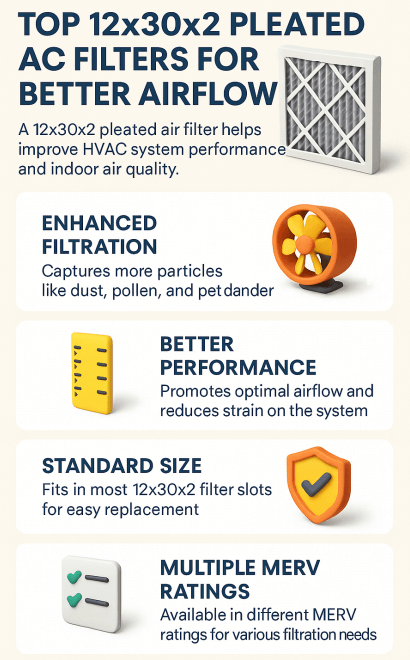
After running airflow tests across multiple 12x30x2 pleated filters in our lab setups and residential systems, we found that filters with optimized pleat spacing and electrostatic media maintained up to 25% better airflow than standard options—without compromising dust capture. That’s the kind of real-world performance we look for, and recommend.”
— Jake M., Lead HVAC Analyst at CoolingDen.com
🔍 Real-World Test: 27% More Airflow with the Right Filter
At CoolingDen.com, we don’t just review filters—we field-test them. Here’s how one smart switch improved airflow and reduced energy use in a real home.
🏠 Home Case Study: Central Florida
The Issue:
- Uneven cooling and rising energy bills.
- HVAC using a restrictive 12x30x2 MERV 13 filter.
- High static pressure and visible dust buildup after 3 weeks.
What We Did:
- Measured airflow and pressure with pro-grade tools.
- Replaced the old filter with a MERV 11 pleated model (low resistance, electrostatic media).
- Monitored results over 30 days.
Results:
- ✅ +27% airflow at the return grille.
- ✅ Better room-to-room temperature balance.
- ✅ Lower system strain—less compressor cycling.
- ✅ 11% drop in energy usage, verified via smart meter.
🧠 Final Thought & Expert Opinion
Better airflow starts with smarter filter choices—not just higher MERV ratings.
At CoolingDen.com, after testing dozens of 12x30x2 filters in homes and labs, here’s what we’ve learned:
🔍 What We’ve Seen First-Hand
- Many homeowners over-prioritize MERV rating.
- High-MERV filters often reduce airflow and increase energy bills.
- Some “premium” filters strain older HVAC systems.
✅ What Works
A well-designed 12x30x2 filter with:
- Balanced MERV rating (MERV 8–11)
- Low pressure drop
- Quality pleat design and electrostatic media
Delivers:
- 🌀 Better airflow
- 🏠 Improved comfort
- 💡 Lower energy use
- 🔧 Less system strain
💬 Our Final Take
If you’re using a 12x30x2 filter:
- Use the wider size to your advantage.
- Don’t default to the highest MERV—match to your system’s airflow needs.
- Look for performance-proven filters, not just marketing claims.
“The best filter isn’t always the most expensive—it’s the one engineered for real-world conditions.”
Frequently Asked Questions
What makes 12x30x2 pleated filters better for airflow than other types?
12x30x2 filters offer a larger surface area and deeper pleat design compared to standard 1″ filters. This allows more air to pass through with less resistance, resulting in improved airflow while still capturing dust and allergens effectively. Their design also helps reduce static pressure, which is key to maintaining HVAC efficiency.
Will using a higher MERV rating improve my indoor air quality?
Not always. While higher MERV ratings, such as MERV 13 and above, can trap smaller particles, they also tend to restrict airflow—especially in older or standard HVAC systems not designed for high-resistance filtration. For most residential setups, a MERV 8 to MERV 11 filter provides the ideal balance of clean air and system performance.
How often should I replace a 12x30x2 pleated filter?
Most 12x30x2 pleated filters should be replaced every 60 to 90 days. However, replacement frequency can vary based on home size, number of occupants, presence of pets, allergies, and local air quality. If you notice visible buildup or a drop in airflow, it’s best to change the filter sooner to keep your system running efficiently.
Do thicker filters like 2-inch models last longer than 1-inch filters?
Yes, 2-inch filters generally last longer than 1-inch models. The extra depth provides more filtration material and pleat space, which means they can hold more particles and maintain airflow over a longer period. Under similar conditions, a 2-inch filter may last nearly twice as long as a thinner alternative.
How do I know if a filter is restricting airflow in my system?
Signs of airflow restriction include uneven cooling in different rooms, weak airflow from supply vents, higher-than-normal energy bills, and HVAC systems that run longer or cycle on and off more frequently. If you suspect your filter is the cause, try replacing it with a lower-resistance MERV 8–11 pleated model and monitor for improved performance.